▼▼▼▼▼▼▼▼▼▼▼ |
2009 |
▼▼▼▼▼▼▼▼▼▼▼ |
August 14, 2009
The District Attorney Investigates the Deaths with Spears
El Comercio
The Orellana Prosecution began yesterday after a prior inquiry to investigate the death of Sandra Zabala and her son and daughter Byron and Tatiana.>>>Read Full Article in English
14 de August del 2009 NUEVO
La Fiscalía indaga las muertes con lanzas
El Comercio
La Fiscalía de Orellana abrió ayer una indagación previa para investigar la muerte de Sandra Zabala y de sus hijos Byron y Tatiana.>>> Leer todo el articulo En Espanol
August 13, 2009
The baby of the speared family was found safe in Orellana
El Comercio
The little one, barely six months old, was found yesterday in the jungle. He was in a hole in the form of a cot, one kilometer from the site where he was kidnapped.>>>Read Full Article in English
13 de August del 2009 NUEVO
El bebé de la familia lanceada fue hallado a salvo en Orellana
El Comercio
El pequeño, de apenas seis meses de nacido, fue hallado ayer en la jungla. Estaba en un agujero en forma de cuna, a un kilómetro del sitio donde fue secuestrado.>>> Leer todo el articulo En Espanol
August 12, 2009
Three Dead with Taromenane Spears
El Comercio
A woman and her son and daughter were supposedly speared by indigenous peoples. A six-month-year-old baby is missing and the police initiated their search.>>>Read Full Article in English
12 de August del 2009 NUEVO
3 muertos con lanzas taromenane
El Comercio
Una mujer y sus dos hijos fueron lanceados supuestamente por indígenas. Un bebé, de seis meses, se encuentra desaparecido y la Policía inició su búsqueda.>>> Leer todo el articulo En Espanol
July 16, 2009
Peruvian Lumber Camp Destroyed in Untouchable Area of Ecuador
El Comercio
A Peruvian lumber camp was destroyed after being discovered in a preserved area of the Amazon jungle of Ecuador, where indigenous peoples live in voluntary isolation, reported the Ministry of the Environment on Thursday.>>>Read Full Article in English
16 de Julio del 2009 NUEVO
Destruyen campamento maderero peruano en zona intangible de Ecuador
El Comercio
Un campamento maderero peruano fue destruido tras ser descubierto en una zona preservada de la selva de la Amazonia de Ecuador, donde habitan indígenas en aislamiento voluntario, informó el jueves el Ministerio del Ambiente.>>> Leer todo el articulo En Espanol
July 14, 2009
A Toxic Water Spill, Out of Control for More Than 15 days
El Comercio
The villages located in the Pacayacu region, north of Sucumbíos, face a silent enemy. Since last June 27th, the Shuara 24D well, located in the heart of this
area, has been pouring a yellow liquid that carries a potent toxic load.>>>Read Full Article in English
14 de Julio del 2009 NUEVO
Un derrame de agua tóxica, sin control por más de 15 días
El Comercio
Los poblados ubicados en el sector de Pacayacu, norte de Sucumbíos, enfrentan un enemigo silencioso. Desde el pasado 27 de junio, el pozo Shuara 24D, que se ubica en pleno
corazón de esta zona, vierte un líquido amarillo que lleva una potente carga tóxica.>>> Leer todo el articulo En Espanol
July 8, 2009
18 Illegal Loggers Arrested in Yasuní
El Comercio
Makeshift camps for the logging of cedar trees were located and destroyed.>>>Read Full Article in English
8 de Julio del 2009 NUEVO
18 madereros ilegales detenidos en Yasuní
El Comercio
Campamentos improvisados para la tala de árboles de cedro fueron localizados y destruidos.>>> Leer todo el articulo En Espanol
June 15, 2009
From Today on Ecuador is Promoting the Yasuní-ITT Initiative in Europe
El Comercio
The Ecuadorian delegation was responsible for disseminating this proposal, setting of on a journey starting with the United Kingdom and then continuing on to Germany.>>>Read Full Article in English
15 de Junio del 2009 NUEVO
Ecuador sustenta desde hoy la Iniciativa Yasuní-ITT en Europa
El Comercio
La delegación ecuatoriana encargada de difundir esta propuesta emprendió el periplo por el Reino Unido y luego continuará por Alemania.>>> Leer todo el articulo En Espanol
June 9, 2009
PERU - Amazonian Indians Continue to Cut Routes
El Comercio
The situation is potentially explosive after the past weekend in which clashes launched between natives and police in other Amazonian highways in Bagua, leaving a death toll of 34 so far, including 25 soldiers, but the natives insist that there are many more casualties on their side.>>>Read Full Article in English
9 de Junio del 2009 NUEVO
PERU - Indígenas amazónicos siguen con el corte de rutas
El Comercio
La situación es potencialmente explosiva, luego de que el fin de semana pasado se presentaran choques entre nativos y policías en otra carretera amazónica, en Bagua, con un saldo por ahora de 34 muertos, de ellos 25 uniformados, aunque los nativos insisten en que las víctimas de su lado son muchas más.>>> Leer todo el articulo En Espanol
June 8, 2009
The Yasuní-ITT Initiative is Moving Forward
El Comercio
Isn’t it a contradiction – in times of economic crisis – to search for economic resources to protect nature and the environment, as Ecuador is doing now with the Yasuní-ITT initiative?>>>Read Full Article in English
8 de Junio del 2009 NUEVO
La iniciativa Yasuní-ITT es de avanzada
El Comercio
¿No es una contradicción -en tiempos de crisis económica- buscar recursos económicos para proteger la naturaleza y el ambiente, como ahora está haciendo Ecuador con la iniciativa Yasuní-ITT? >>> Leer todo el articulo En Espanol
May 31, 2009
The Yasuní-ITT Reaches the White House
El Comercio
Long before the president of Ecuador, Rafael Correa, approved the Yasuni-ITT Initiative, the machinery for the promotion of keeping this area of the Amazon untouched, in exchange for creating a fund with the sale of carbon certificates, was already running. After all, he was the same president who came up with the proposal.>>>Read Full Article in English
31 de Mayo del 2009 NUEVO
El Yasuni-ITT Llega a la Casa Blanca
El Comercio
Mucho antes de que el presidente del Ecuador, Rafael Correa, apruebe la Iniciativa Yasuní-ITT, la maquinaria de promoción de mantener esta área de la Amazonia intocable, a cambio de crear un fondo con la venta de certificados de carbono, ya venía corriendo. Después de todo fue el mismo Primer Mandatario quien ideó la propuesta.>>> Leer todo el articulo En Espanol
May 31, 2009
Maps That Reveal the Amazon
El Comercio
Indispensable information. The source of the Amazonian social conflicts like those recently experienced is not only political: there is a great lack of understanding about the region.>>>Read Full Article in English
31 de Mayo del 2009 NUEVO
Mapas que revelan la Amazonía
El Comercio
Información indispensable. La fuente de los conflictos sociales amazónicos como los vividos recientemente, no es solo política: hay un gran desconocimiento de la realidad de la región.>>> Leer todo el articulo En Espanol
May 27, 2009
Ecuador Offers a Tool Against CO2
El Comercio
The country insists on not exploiting the ITT oil block in the Yasuní Park, in exchange to sell carbon certificates. In June it will be presented to Europe.>>>Read Full Article in English
27 de Mayo del 2009 NUEVO
Ecuador oferta una herramienta contra el CO2
El Comercio
El país insiste en no explotar el crudo del bloque ITT, en el parque Yasuní, a cambio de vender certificados de carbono. En junio se presentará en Europa.>>> Leer todo el articulo En Espanol
April 28, 2009
Chevron Texaco Case Reaches U.S. Congress
El Comercio
The pollution caused by U.S. oil companies in the Amazon region of Ecuador is a violation of human rights that seriously threatens the local population, said the leader of a committee in the United States House of Representatives today.>>>Read Full Article in English
28 de Abril del 2009 NUEVO
Caso Chevron Texaco llegó al Congreso de EE.UU
El Comercio
La contaminación ocasionada por empresas petroleras estadounidenses en la región amazónica ecuatoriana es una violación de derechos humanos que amenaza gravemente a la población local, afirmó hoy el líder de un panel de la Cámara de Representantes de Estados Unidos.>>> Leer todo el articulo En Espanol
March 5, 2009
The Legislature Develops a Penalty for Ethnocide
El Comercio
The recent killing by the FARC (Revolutionary Armed Forces of Colombia) of members of the Awa ethnic group in southern Colombia led to the Legislative Audit Commission to push for a law punishable by 16 to 25 years imprisonment for those who committed acts of physical, cultural, or lifestyle aggression or of another nature against the inhabitants of the villages of Ecuador, that live in voluntary isolation.>>>Read Full Article in English
5 de Marzo del 2009 NUEVO
El Legislativo desarrolla una sanción para el etnocidio
El Comercio
La reciente matanza, por parte de las FARC, a miembros de la etnia awa, en el sur de Colombia, llevó a la Comisión Legislativa y de Fiscalización a impulsar una ley para sancionar con penas de 16 a 25 años de reclusión especial a aquellos que comentan agresión física, cultural, a su forma de vida o de otra índole, contra los habitantes de los pueblos del Ecuador, que viven en aislamiento voluntario.>>> Leer todo el articulo En Espanol
January 21, 2009
Remaining Reasons to Save the Yasuní Region
El Comercio
The disappearance of indigenous cultures and thousands of threatened species. A $1250 million dollar environmental and social cost. These are the drastic effects that are foreseen for the Yasuní National Park in the event that crude oil in the Ishpingo-Tambococha-Tiputini (ITT) block is exploited, in the heart of this Amazon reserve.>>>Read Full Article in English
21 de Enero del 2009 NUEVO
Razones para salvar al Yasuní sobran
El Comercio
La desaparición de culturas indígenas y de miles de especies amenazadas. Un costo ambiental y social de USD 1 250 millones. Esos son los drásticos efectos que se prevén para el Parque Nacional Yasuní, en caso de que se explote el crudo en el bloque Ishpingo-Tambococha-Tiputini (ITT), en el corazón de esta reserva amazónica.>>> Leer todo el articulo En Espanol
January 14, 2009
Inconsistencies Undermine ITT Initiative
El Comercio
The Government is sending a two-way message: leave the oil underground and call on bidders for exploitation.>>>Read Full Article in English
14 de Enero del 2009 NUEVO
Las contradicciones minan la Iniciativa ITT
El Comercio
El Gobierno maneja un discurso de doble vía: dejar el crudo bajo tierra y llamar a licitación para su explotación.>>> Leer todo el articulo En Espanol
January 7, 2009
Ecuador Goes After Carbon Credits to Save the Yasuni
El Comercio
Embedded in the heart of the Yasuni Nation Park, the ITT block no longer pretends to leave crude oil underground. Now the proposition is to prevent the emission of 410 million metric tons of Carbon Dioxide, CO2, into the atmosphere.>>>Read Full Article in English
7 de Enero del 2009 NUEVO
Ecuador va por los bonos de carbono para salvar al Yasuní
El Comercio
Ya no solo se pretende dejar el crudo bajo tierra en el bloque ITT, incrustado en el corazón del Parque Nacional Yasuní. Ahora la propuesta es evitar que se emitan a la atmósfera 410 millones de toneladas métricas de dióxido de carbono (CO2).>>> Leer todo el articulo En Espanol
▲▲▲▲▲▲▲▲▲▲▲
▼▼▼▼▼▼▼▼▼▼▼ |
2009
2008 |
▲▲▲▲▲▲▲▲▲▲▲
▼▼▼▼▼▼▼▼▼▼▼ |
November 6, 2008
Repsol Will Operate Under a Services Contract in One Year
El Comercio
The Ecuadorian government took a new step in the process of renegotiating contracts with foreign oil companies when it announced a transitional agreement with the Argentinean company Repsol YPF, just after threatening to force it to leave the country.>>>Read Full Article in English
6 de Noviembre del 2008 NUEVO
Repsol operará bajo contrato de prestación de servicios en un año
El Comercio
El Gobierno ecuatoriano dio un nuevo paso en su proceso de renegociación de los contratos con las petroleros extranjeras al anunciar un acuerdo transitorio con la empresa hispano argentina Repsol YPF, poco después de amenazarla con su salida del país.>>> Leer todo el articulo En Espanol
Nobember 6 , 2008
Repsol Intends to Save its Contract
El Comercio
The first contacts between Repsol and Ecuador took place yesterday, following the announcement of the anticipated ending of the contract with the company.>>>Read Full Article in English
6 de Noviembre del 2008 NUEVO
Repsol intenta salvar su contrato
El Comercio
Ayer se dieron los primeros acercamientos entre Repsol y el Gobierno, luego de que se anunció la terminación anticipada del contrato con esta petrolera.>>> Leer todo el articulo En Espanol
November 4 , 2008
The Manta-Manaos Axis Causes Resistance
El Comercio
Almost 20 Quichua communities in the Aguarico region, located along the bank of the Napo river, form the Network of Communities of the Napo River.>>>Read Full Article in English
4 de Noviembre del 2008 NUEVO
El eje Manta-Manaos causa resistencia
El Comercio
Cerca de 20 comunidades quichuas del cantón Aguarico, ubicadas en la ribera del río Napo, se agruparon y conformaron la Red de Comunidades del Río Napo (Red- Corn).>>> Leer todo el articulo En Espanol
October 12, 2008
The ITT Proposal Generates Interest but No Contributions
El Comercio
Ecuador felt “great enthusiasm” in the international community for the project to create an annual fund of 350 million dollars in compensation for not exploiting ITT, but they have not received the hoped-for contributions.>>>Read Full Article in English
12 de Octubre del 2008 NUEVO
El ITT genera interés, pero sin contribuciones
El Comercio
Ecuador percibió un “gran entusiasmo” en la comunidad internacional hacia el proyecto para crear un fondo de USD 350 millones anuales, en compensación a la no explotación del ITT, aunque no ha recibido las contribuciones esperadas.>>> Leer todo el articulo En Espanol
October 4, 2008
Nature Isn’t Everything…
El Comercio
The ex-Minister of Agriculture and the current President of the Central Bank Directory, Carlos Vallejo, said something yesterday that left environmentalists and experts in sustainable tourism open-mouthed as they participated this week in three mega-forums organized in Quito.>>>Read Full Article in English
4 de Octubre del 2008 NUEVO
La naturaleza no es de todos...
El Comercio
El ex ministro de Agricultura y ahora presidente del Directorio del Banco Central, Carlos Vallejo, lanzó ayer una perla que dejó boquiabiertos a los ambientalistas y expertos en turismo sostenible que esta semana participaron en tres megaforos organizados en Quito.>>> Leer todo el articulo En Espanol
October 3 , 2008
The Government Says that the Voluntary Reversion of Block 31 Strengthens Ties with Brazil
El Comercio
The Ecuadorian Minister of Mines and Petroleum, Galo Chiriboga, said today that the “voluntary reversion” of Block 31 to the Ecuadorian government on the part of the Brazilian state company Petrobras “strengthens” the oil relationship with Brazil.>>>Read Full Article in English
3 de Octubre del 2008 NUEVO
Gobierno dice que reversión voluntaria de Bloque 31 refuerza lazos con Brasil
El Comercio
El ministro ecuatoriano de Minas y Petróleos, Galo Chiriboga, consideró hoy que la "reversión voluntaria" al Estado ecuatoriano del Bloque 31 por parte de la estatal brasileña Petrobras, "consolida" la relación petrolera con Brasil.>>> Leer todo el articulo En Espanol
October 2 , 2008
Mining Activity Faces Obstacles
El Comercio
With the fluctuation of the price of crude, the Government has set its sights on another extractive activity: mining.>>>Read Full Article in English
2 de Octubre del 2008 NUEVO
La actividad minera enfrentará barreras
El Comercio
El vaivén del precio del crudo ha puesto en la mira del Gobierno a otra actividad extractivista: la minería.>>> Leer todo el articulo En Espanol
October 1, 2008
TC Defends the Huao Community
El Comercio
Disregard for the collective rights of the Huaorani people. That was the argument that the Chamber I of the Constitutional Court (TC) decided on yesterday to order the cancellation of the usufruct contract of 613,750 hectares of land that was in for the Genesis Eco Development Company.>>>Read Full Article in English
1 de Octubre del 2008 NUEVO
El TC defiende a la comunidad huao
El Comercio
Un irrespeto a los derechos colectivos del pueblo huaorani. Ese fue el argumento para que la I Sala del Tribunal Constitucional (TC) decida ayer ordenar la cancelación del contrato de usufructo de 613 750 hectáreas de tierras que tenía a su favor la empresa Eco Génesis Development.>>> Leer todo el articulo En Espanol
September 28, 2008
The Huoarani and the Ministry of the Environment Will Work Together
El Comercio
In the Huaorani community of Ñoneno, seated on the banks of the Shiripuno river, four hours by dirt road and two hours by river to the south of Francisco de Orellana, the Ministry of the Environment and the Huaorani community signed an agreement.>>>Read Full Article in English
28 de Septiembre del 2008 NUEVO
Los huao y el MAE vigilarán juntos
El Comercio
En la comunidad huaorani de Ñoneno, asentada en las orillas del río Shiripuno, a unas cuatro horas por vía terrestre y dos por fluvial, al sur de Francisco de Orellana, se firmó un convenio entre el Ministerio del Ambiente (MAE) y la comunidad huao.>>> Leer todo el articulo En Espanol
September 22, 2008
Block 31 Will Return to State Hands in Sixty Days
El Comercio
In sixty days the Brazilian oil company Petrobras will hand over Block 31 to Petroecuador.>>>Read Full Article in English
22 de Septiembre del 2008 NUEVO
El bloque 31 regresará en 60 días a manos estatales
El Comercio
En 60 días se concretará la entrega del bloque 31 a Petroecuador. Actualmente está a cargo de la brasileña Petrobras.>>> Leer todo el articulo En Espanol
September 22, 2008
Hungary Supports the ITT Proposal
El Comercio
Hungary supports Ecuador’s proposal to keep the oil reserves located in Yasuní National Park underground.>>>Read Full Article in English
22 de Septiembre del 2008 NUEVO
Hungría apoya el plan del ITT
El Comercio
Hungría apoya el proyecto mediante el cual Ecuador propone mantener en tierra las reservas de petróleo del Parque Nacional Yasuní.>>> Leer todo el articulo En Espanol
September 12, 2008
Francisco Carrión searches in Italy for support of the Yasuní-ITT project
El Comercio
Francisco Carrión, the ex-Chancellor of Ecuador and the personal representative of President Rafael Correa, was in Italy today searching for support and contributions for the conservationist project Yusuní-ITT, which seeks to prevent the development of an important oil reserve in Ecuador.>>>Read Full Article in English
12 de Septiembre del 2008 NUEVO
Francisco Carrión busca en Italia apoyos para el Proyecto Yasuní-ITT
El Comercio
El ex canciller de Ecuador Francisco Carrión, representante personal del presidente Rafael Correa, buscó hoy en Italia apoyos y contribuciones al proyecto conservacionista Yasuní-ITT, que prevé evitar la explotación de un importante yacimiento de petróleo en el país sudamericano.>>> Leer todo el articulo En Espanol
September 9, 2008
The Government Will Begin Bidding for the ITT Oil Fields in January if it Receives No Help to Avoid Development
El Comercio
Ecuador is planning to begin accepting bids on the Ishpingo-Tambococha-Tiputini (ITT) oil field, the largest reserve in the country, in January of 2009, if it does not receive sufficient offers of compensation to keep the oil underground by that date.>>>Read Full Article in English
9 de Septiembre del 2008 NUEVO
Gobierno licitará campo ITT en enero si no hay ayudas para evitar explotación
El Comercio
Ecuador estudia licitar el campo petrolífero de Ishpingo-Tambococha-Tiputini (ITT), la reserva más grande del país, en enero de 2009, si hasta esa fecha no recibe suficientes ofertas compensatorios para mantener el crudo bajo tierra.>>> Leer todo el articulo En Espanol
August 8, 2008
Petroecuador: ITT Offer is Ready
El Comercio
William Pastor, an agent of Petroecuador’s affiliate company Petroamazonas, announced yesterday that the company’s proposal for the extraction of the Ishpingo Tambococha Tiputini (ITT) oil field is ready for presentation. With 900 million barrels, the ITT field is one of the stars of the regime for oil projects of that caliber.>>>Read Full Article in English
8 de Agosto del 2008 NUEVO
Lista la oferta para el ITT: Pastor
El Comercio
El gerente de Petroamazonas, filial de Petroecuador, Wilson Pastor, informó ayer que está lista la propuesta que presentará esta empresa para la explotación del campo Ishpingo Tambococha Tiputini (ITT). Por su nivel de reservas (900 millones de barriles), el ITT es uno de los proyectos petroleros estrella del Régimen.>>> Leer todo el articulo En Espanol
August 1, 2008
4 Waorani Arrested in Orellana for a Robbery
El Comercio
Four indigenous Waorani were arrested in the province of Orellana. The arrest took place on July 26th in the oil block 16, operated by the Spanish oil company Repsol YPF.>>>Read Full Article In English
1 de Agosto del 2008 NUEVO
Huaoranis detenidos en Orellana por un robo
El Comercio
Cuatro indígenas de la etnia huaorani fueron detenidos en la provincia de Orellana. La detención se realizó en el bloque 16, operado por la empresa petrolera española Repsol YPF, el pasado 26 de julio.>>> Leer todo el articulo En Espanol
July 22 , 2008
Ecuador Urges Donations to Keep ITT Oil Below Ground
El Comercio
The Ecuadorian government urges individuals throughout the world to make donations to the “Energy Transition Fund,” created so that the country’s most important oil reserves will not be exploited but will remain below ground.>>>Read Full Article In English
22 de Julio del 2008 NUEVO
Gobierno insta a realizar donaciones para mantener crudo del ITT bajo tierra
El Comercio
El Gobierno invitó hoy a particulares de todo el mundo a hacer donaciones para el "Fondo para la Transición Energética", creado con el propósito de que las reservas petroleras más importantes del país no sean explotadas y se conserven en el subsuelo.>>>Leer todo el articulo En Espanol
July 17 , 2008
Four Options to Fill the Mega-Refinery
El Comercio
The Ecuadorian government hopes to be able supply to crude oil to the new refinery, Eloy Alfaro, that will be contructed in Manabí. This is the first option, although they have not discredited the other three alternatives.>>>Read Full Article In English
17 de Julio del 2008 NUEVO
4 opciones para llenar a la megarrefinería
El Comercio
El Gobierno aspira a llenar con crudo propio la nueva refinería Eloy Alfaro que se construirá en Manabí. Esa es la primera opción que maneja el Régimen, aunque no se descartan otras tres alternativas.>>> Leer todo el articulo En Espanol
July 7 , 2008
The first alternative is to keep the oil underground
El Comercio
Why hasn't anything happened in regard to the
proposal to keep the crude in the ground after
a full year?>>>Read Full Article In English
7 de Julio del 2008 NUEVO
La primera alternativa es mantener el crudo bajo tierra
El Comercio
¿Por qué no hay resultados de la propuesta de mantener el crudo en tierra, tras un año?>>> Leer todo el articulo En Espanol
July 2 , 2008
Correa's Plan B for ITT
El Comercio
The lack of results of the project to leave the oil in Yasuni land concerns the president Rafael Correa. He went yesterday to the Board of Petroecuador to address this issue.>>>Read Full Article In English
2 de Julio del 2008 NUEVO
Correa, con plan B para ITT
El Comercio
La falta de resultados del proyecto para mantener el crudo del Yasuní en tierra preocupa al presidente Rafael Correa. El Mandatario asistió ayer al Directorio de Petroecuador para tratar este tema.>>>Leer todo el articulo En Espanol
June 28 , 2008
More resources to care for Yasuní
El Comercio
Yesterday was the official presentation in Coca
of the Program to Improve the Conservation and
Sustainable Use of the Natural and Cultural
Assets of the Yasuní Biosphere Reserve. The purpose of the program is to improve the protection of the native peoples as well as of the biodiversity.>>>Read Full Article In English
28 de Junio del 2008 NUEVO
Más recursos para cuidar el Yasuní
El Comercio
El objetivo es mejorar la protección de los pueblos nativos y de la biodiversidad. Ayer fue la presentación oficial, en Coca, del Programa para la Conservación y el Manejo Sostenible del Patrimonio Natural y Cultural de la Reserva de Biósfera Yasuní.>>>Leer todo el articulo En Espanol
June 25 , 2008
Plan to Not Exploit ITT Remains without Directors
El Comercio
Just four months before the installment to obtain
funds to avoid oil extraction from the ITT fields,
many of the involved parties have left the project.>>>Read Full Article In English
25 de Junio del 2008 NUEVO
El plan para no explotar el ITT se queda sin directivos
El Comercio
A menos de cuatro meses de que concluya el
plazo para recabar fondos para evitar la explotación petrolera del campo ITT, sus responsables dejan el proyecto.>>>Leer todo el articulo En Espanol
June 5 , 2008
Correa insists on international co-responsibility for ITT
El Comercio
President Rafael Correa insisted today on the
necessity of international co-responsibility
in order to continue keeping crude oil underground
in the Ishpingo Tambococha Tiputini (ITT) fields,
located in Yasuní National Park in the Amazon.>>>Read Full Article In English
5 de Junio del 2008 NUEVO
Correa insiste en corresponsabilidad internacional en caso ITT
El Comercio
El presidente Rafael Correa insistió hoy en la necesidad de que exista corresponsabilidad internacional para poder continuar con su proyecto de mantener en tierra el petróleo del campo Ishpingo Tambococha Tiputini (ITT), situado en el campo Yasuní, en la Amazonía.>>> Leer todo el articulo En Espanol
May 28, 2008
Oil and Gas Blocks Cover 75 Percent of the Peruvian Amazon
Environmental News Service
LIMA, Peru, May 28, 2008 (ENS) - The Peruvian Amazon, a region that holds some of the most pristine and biodiverse rainforests on Earth, continues to face an unprecedented wave of new oil and gas exploration.>>>Read Full Article In English
28 de Mayo del 2008
Bloques de crudo y gas cubren 75 porciento de la amazonia peruana
Environmental News Service
Lima, Peru (ENS) - La amazonia peruana, una región que tiene unos de los bosques tropicales más pristinos del mundo, sigue experimentando mucha exploración por gas y crudo.>>> Leer todo el articulo En Espanol
May 20 , 2008
General secretary of OPEC visits Ecuador; investigates ITT project
El Comercio
The Secretary General of the Organization of
Petroleum Exporting Countries (OPEC), Abdullah
Salem El-Badri (Libya), will visit Ecuador tomorrow.
He is interested in learning about the ITT project
taking place in the Ecuadorian Amazon.>>>Read Full Article In English
20 de Mayo del 2008
Secretario general de la OPEP visita Ecuador interesado en el proyecto ITT
El Comercio
El secretario General de la Organización de Países Exportadores de Petróleo (OPEP), el libio Abdala Salem El- Badri, visitará desde mañana Ecuador interesado en conocer el proyecto ITT, situado en la Amazonía ecuatoriana.>>>Leer todo el articulo En Espanol
May 12 , 2008
Spain shows interest in Ecuador's ecological plan
El Comercio
Spanish Foreign Minister Miguel Angel Moratinos
expressed Spain's "interest" today in the plan to conserve the Ecuadorian Yasuni National Park through a compensation fund that will keep Ecuador from exploiting its oil reserves.>>>Read Full Article In English
12 de Mayo del 2008
España muestra su "interés" por plan ecológico ecuatoriano
El Comercio
El ministro de Asuntos Exteriores español, Miguel Ángel Moratinos, expresó hoy el "interés" de España por el plan para la conservación del Parque Nacional Yasuní ecuatoriano mediante un fondo de compensación para que Quito renuncie a explotar esos recursos petroleros.>>> Leer todo el articulo En Espanol
May 12 , 2008
Correa announces plan to keep crude oil underground at the EU-LAC summit
El Comercio
The president of Ecuador, Rafael Correa, will
invite the leaders attending the Latin America
and the Caribbean-European Union (EU-LAC) Summit
V to support his government's plan to leave
the crude oil in the ITT oil field underground
in order to preserve the Amazon.>>>Read Full Article In English
12 de Mayo del 2008
Correa expondrá en la Cumbre ALC-UE su plan para dejar crudo en tierra
El Comercio
El presidente de Ecuador, Rafael Correa, invitará a los líderes que asistan a la V Cumbre América Latina y el Caribe-Unión Europea (ALC-UE) a apoyar el plan de su Gobierno para dejar en tierra el crudo del campo ITT (Ishpingo, Tiputini, Tambococha), con el fin de preservar la naturaleza en la Amazonía.>>> Leer todo el articulo En Espanol
April 14 , 2008
The TC gave way to a claim against Petrobras
El Comercio
The Constitutional Court, through third chamber,
accepted an appeal against the environmental
license granted to Petrobras.>>>Read Full Article In English
14 de Abril del 2008
El TC dio paso a un recurso de amparo contra Petrobras
El Comercio
El Tribunal Constitucional, a través de su III Sala, aceptó un recurso de amparo en contra de la licencia ambiental otorgada a Petrobras.>>>Leer todo el articulo En Espanol
March 27 , 2008
An environmental protection office opened in Orellana
El Comercio
Yesterday marked the opening of offices of the
Regional Bureau for Environmental Protection
of the Ministry of Mines and Petroleum in Orellana.
The minister Galo Chiriboga inaugurated this
bureau.>>>Read Full Article In English
27 de Marzo del 2008
Una oficina de protección ambiental se abrió en Orellana
El Comercio
Ayer se inauguraron las oficinas de la Dirección Regional de Protección Ambiental del Ministerio de Minas y Petróleos en Orellana. El ministro Galo Chiriboga inauguró esta dependencia.>>>Leer todo el articulo En Espanol
February 26, 2008
A plan to protect the Yasuní is put into effect
El Comercio
The objective of the plan is to protect the
natural and cultural heritage of the Yasuní Biosphere Reserve. Yesterday, the Ministry of the Environment and several organizations signed an agreement to develop the Program for the Conservation and Sustainable Management of the Yasuní Biosphere Reserve.>>>Read Full Article In English
26 de Febrero del 2008
Un plan para proteger al Yasuní, en marcha
El Comercio
El objetivo es proteger el patrimonio natural y
cultural. Ayer, el Ministerio del Ambiente y
varias organizaciones firmaron un convenio para
desarrollar el Programa para la Conservación y el Manejo Sostenible de la Reserva de Biosfera Yasuní.>>> Leer todo el articulo En Espanol
February 19, 2008
Three nationalities ask that their land be respected
El Comercio
Members of the Shuar, Quichua and Huaorani nationalities,
who live in the Amazonian province of Pastaza,
are concerned about the expansion of settlers
into their ancestral territories.>>>Read Full Article In English
19 de Febrero del 2008
Tres nacionalidades piden que se respeten sus tierras
El Comercio
Integrantes de las nacionalidades shuar, quichua
y huaorani, que habitan en la provincia amazónica de Pastaza, están preocupados por la expansión de los colonos en sus territorios ancestrales.>>> Leer todo el articulo En Espanol
February 19, 2008
The official comission found only the spears of 5 lost indigenous people
El Comercio
It took a Government commission two days to
reach the site where, supposedly, there were
the bodies of five indigenous people of the
tagaeri-taromenane group. >>>Read Full Article In English
19 de Febrero del 2008
La comisión oficial solo halló las lanzas de 5 indígenas perdidos
El Comercio
Dos días le tomó a una comisión del Gobierno llegar al sitio donde supuestamente se hallaban los cadáveres de cinco indígenas tagaeri-taromenane.>>> Leer todo el articulo En Espanol
February 14, 2008
CONAIE denounces the death of at least 5 taromenanis in the Amazon
El Comercio
At least five members of the indigenous group taromenani, in voluntary isolation, were killed in early February by alleged Columbian wood-cutters in the Ecuadorian Amazon, the Confederation of Indigenous Nationalities of Ecuador (CONAI) announced today.>>>Read Full Article In English
14 de Febrero del 2008
La Conaie denuncia la muerte de al menos 5 taromenanis en la Amazonia
El Comercio
Por lo menos cinco miembros del grupo indígena taromenani, en aislamiento voluntario, fueron asesinados a comienzos de febrero por supuestos madereros colombianos en la Amazonia ecuatoriana, denunció hoy la Confederación de Nacionalidades Indígenas del Ecuador (Conaie).>>> Leer todo el articulo En Espanol
February 11, 2008
Attorney asks for four oil companies to leave the Yasuní
El Comercio
The Attorney General of the State, Xavier Garaicoa,
called for an amendment of the definition of
the oil blocks that are located in the intangible
area of the Yasuní.>>>Read Full Article In English
11 de Febrero del 2008
Procuraduría pidió la salida de 4 petroleras del Yasuní
El Comercio
El Procurador General del Estado, Xavier Garaicoa,
pidió que se modifique la delimitación de los bloques petroleros que están en la zona intangible del Yasuní. En esta zona están presentes Repsol, Petroriental, Petrobras y Petroecuador.>>> Leer todo el articulo En Espanol
February 2, 2008
Two ministers investigate the oil spill in Orellana
El Comercio
An investigation was launched yesterday of the
oil spill that occurred earlier on Wednesday
in block 16, managed by Repsol YPF.>>>Read Full Article In English
2 de Febrero del 2008
Dos ministerios investigan el derrame de crudo en Orellana
El Comercio
Una investigación se inició ayer sobre el derrame de crudo ocurrido el miércoles anterior, en el bloque 16, administrado por Repsol YPF.>>> Leer todo el articulo En Espanol
January 11 2008
More oil in the Yasuní
El Comercio
Drilling in the Ishpingo 3 well, located in
Yasuní National Park, was completed yesterday. There are an estimated five geological layers in the well. The first layer yielded an output of 2,373 barrels per day of crude oil, while the anterior well gave an output of 4,481. The technicians have yet to discover the limits of this reservoir, considered the largest of the Amazon.>>>Read Full Article In English
11 de Enero del 2008
Más petróleo en el Yasuní
El Comercio
En el Parque Nacional Yasuní se terminó de perforar el pozo Ishpingo 3 y ya se evalúan cinco capas geológicas. Solo la primera arrojó una producción de 2 373 barriles diarios de crudo, mientras que el pozo anterior dio una producción de 4 481. Los técnicos aún no hallan los límites de este yacimiento, considerado el mayor de la Amazonia.>>> Leer todo el articulo En Espanol
January 11 2008
Ecuador extends the deadline to not exploit the ITT until October
El Comercio
The president Rafael Correa extended the deadline
from June until October to wait for the international
community to step up and prevent the exploitation
of petroleum in a natural reserve of Ecuador
on the condition that they pay for its conservation. >>>Read Full Article In English
11 de Enero del 2008
Ecuador extiende hasta octubre el plazo para no explotar el ITT
El Comercio
El presidente de Ecuador, Rafael Correa, extendió hasta septiembre el plazo para captar la ayuda internacional, que permitiría dejar en tierra grandes reservas de crudo en un campo petrolífero localizado en un sector sensible de la Amazonía, conocido como ITT.>>> Leer todo el articulo En Espanol
January 9 2008
Deadline to receive help for the ITT project extended until September
El Comercio
The president of Ecuador, Rafael Correa, extended
the deadline to attract international aid until
September. This international aid would allow
large reserves of oil to be left in the ground
of an oil field located in a sensitive sector
of the Amazon, known as ITT>>>Read Full Article In English
9 de Enero del 2008
Plazo para captar ayuda para proyecto ITT se extiende hasta septiembre
El Comercio
El presidente de Ecuador, Rafael Correa, extendió hasta septiembre el plazo para captar la ayuda internacional, que permitiría dejar en tierra grandes reservas de crudo en un campo petrolífero localizado en un sector sensible de la Amazonía, conocido como ITT.>>> Leer todo el articulo En Espanol
January 6 2008
Petroleum: The Hour of Truth
El Comercio
The Ecuadorian economy will continue to be primarily
dependent on oil exports, and the government
knows it cannot allow the sector to repeat the
low yields of 2007. The -9.8 registered last
year affected the modest growth of the Gross
Domestic Product, and reflects that in Ecuador
the conditions were not right to take advantage
of the high global oil prices, in both public
as well as private sectors. >>>Read Full Article In English
6 de Enero del 2008
Petróleo: la hora de la verdad
El Comercio
La economía ecuatoriana seguirá atada principalmente a las exportaciones petroleras, y el Gobierno sabe que no puede dejar que el sector repita este año los bajos rendimientos del 2007. El -9,8 registrado el año pasado incidió en el modesto crecimiento del Producto Interno Bruto, y refleja que en el Ecuador no se dieron las condiciones para aprovechar la coyuntura mundial de los altos precios del crudo, tanto desde el sector público como del privado. >>> Leer todo el articulo En Espanol
January 1, 2008 -
Oil Development Set to Begin in Remote Amazon of Peru and Ecuador,
Threatening Last Uncontacted Indigenous Peoples
Yasuní Rainforest Campaign News - 1 de Enero, 2008 -
One of the most intact and biodiverse rainforest regions on Earth, located in the Upper Amazon on the Ecuadorian-Peruvian border, is now severely threatened by imminent oil development. This region, known as the Napo Moist Forest Region , is renowned for its record-breaking biodiversity numbers and is so remote that it is home to several uncontacted indigenous groups living in voluntary isolation.
>>>Read Full Article In English
1 de Enero del 2008 -
Desarrollo de Petroleo ha de comenzar en el remoto Amazonas,Amenaza a los pueblos indígenas no contactados restantes
Yasuní Rainforest Campaign News - 1 de Enero, 2008 -
EUno de los más biodiversos selva intacta y regiones de la Tierra, situada en la Selva Alta en la frontera ecuatoriano - peruana, se encuentra ahora gravemente amenazada por la inminente explotación petrolera.
Esta región, conocida como la Región del Bosque Húmedo del Napo, es reconocido por su récord de la diversidad biológica y los números están tan alejados que es el hogar de varios grupos de indígenas no contactados que viven en aislamiento voluntario. >>> Leer todo el articulo En Espanol
▲▲▲▲▲▲▲▲▲▲▲
▼▼▼▼▼▼▼▼▼▼▼ |
2008
2007 |
▲▲▲▲▲▲▲▲▲▲▲
▼▼▼▼▼▼▼▼▼▼▼ |
December 21 , 2007
A Waorani, imprisoned "for attacking soldiers"
El Comercio
Since December 4, Nampay Ahua, a Waorani from
the community of Guiyero, has been imprisoned
in the jail of the Judicial Police of Coca.>>>Read Full Article In English
21 de Diciembre del 2007
Un huaorani, preso 'por atacar a militares'
El Comercio
Desde el 4 de diciembre, Nampay
Ahua, un huaorani de la comunidad de Guiyero,
está preso en el calabozo de la Policía Judicial del Coca.>>> Leer todo el articulo En Espanol
December 16 , 2007
A Look at the Waorani Life
El Comercio
An Ecuadorian flag signals the site of the Waorani
community Boanamo. It appears after 15 hours
of navigating the rivers Shiripuno and Cononaco,
in the province of Orellana.>>>Read Full Article In English
16 de Diciembre del 2007
Una mirada a la vida Huaorani
El Comercio
Una bandera de Ecuador señala el sitio donde se asienta la comunidad huaorani de Boanamo. Aparece luego de navegar durante 15 horas los ríos Shiripuno y Cononaco, en la provincia de Orellana.>>> Leer todo el articulo En Espanol
December 9 , 2007
They Have the Support of the Community
El Comercio
"These groups [loggers] can stay a little more than two months," confirms Alonso Jaramillo, director of the Yasuní National Park.>>>Read Full Article In English
9 de Diciembre del 2007
Ellos tienen el respaldo de la comunidad
El Comercio
'Estos grupos (taladores) pueden
permanecer un poco más de dos meses", confirma Alonso Jaramillo, director del Parque Nacional Yasuní.>>> Leer todo el articulo En Espanol
December 4, 2007
Oil Developers Permitted to Penetrate Pristine Upper Amazon
WASHINGTON, DC, December 4, 2007 (ENS) - One of the most intact and biodiverse rainforest regions on Earth, located in the Upper Amazon Basin on the Ecuadorian-Peruvian border, is now threatened by imminent oil development, warns a conservation organization based in Washington with close ties to its counterpart groups in South America.>>>Read Full Article In English
4 de Diciembre del 2007
Trabajadores del Crudo Permitidos en la Amazonía Alta
Washington, D.C., 4 de diciembre del 2007 (ENS) - Una región del bosque tropical de la amazonia situada entre Perú y Ecuador que tiene un nivel muy alto de biodiversidad está amenazada por el desarrollo iminente de crudo, dice una organización ambiental basada en Washington con buenas relaciones con grupos en América del sur.>>> Leer todo el articulo En Espanol
November 27 , 2007
Yasuní Proposal Nears Completion
El Comercio
The negotiating team is ready and details are
being finalized for the mechanism of collecting
the contributions, announced Foreign Secretary
Maria Fernanda Espinosa yesterday. The announcement
was made during the inauguration of an international
forum to analyze the economic model of Yasuní-ITT.>>>Read Full Article In English
27 de Noviembre del 2007
La propuesta Yasuní está a punto
El Comercio
El equipo negociador está listo y se ultiman los detalles del mecanismo de recaudación de los aportes. Aquello anunció ayer la canciller María Fernanda Espinosa, durante la inauguración del taller internacional para analizar el modelo económico Yasuní-ITT.>>> Leer todo el articulo En Espanol
November 3 , 2007
President Defends Concession of Environmental License to Petrobrás
El Comercio
The president of Ecuador, Rafael Correa, on
his radio broadcast today, insisted on defending
the concession of an environmental license to
the Brazilian company Petrobrás. The company extracts crude oil in Block 31 within the Yasuní National Park, a UNESCO world biodiversity reserve.>>>Read Full Article In English
3 de Noviembre del 2007
El Presidente defiende la concesión de la licencia ambiental para Petrobrás
El Comercio
El presidente de Ecuador, Rafael
Correa, insistió hoy en su cadena radial de los sábados en defender la concesión de la licencia ambiental para que la empresa brasileña Petrobrás explote crudo en el bloque 31, dentro del Parque Nacional Yasuní, reserva mundial de la biósfera declarada por la Unesco.>>> Leer todo el articulo En Espanol
November 1 , 2007
CONAIE Appeals Petrobrás' Environmental License
El Comercio
The president of CONAIE (the Confederation of
Indigenous Nations of Ecuador), Luis Macas,
declared today that the Amazon community of
the Waorani submitted a constitutional appeal
against the environmental license recently given
to Petrobrás oil company. The government-issued license allows Petrobrás to drill for crude oil in Yasuní National Park.>>>Read Full Article In English
1 de Noviembre del 2007
La Conaie presenta amparo contra la licencia ambiental de Petrobrás
El Comercio
El presidente de la Confederación de Nacionalidades Indígenas de Ecuador, Luis Macas, declaró hoy que la comunidad amazónica huaorani presentó una demanda de amparo constitucional contra la licencia ambiental dada a la empresa Petrobrás por el gobierno para explotar crudo en el Parque Yasuní.>>> Leer todo el articulo En Espanol
November 1 , 2007
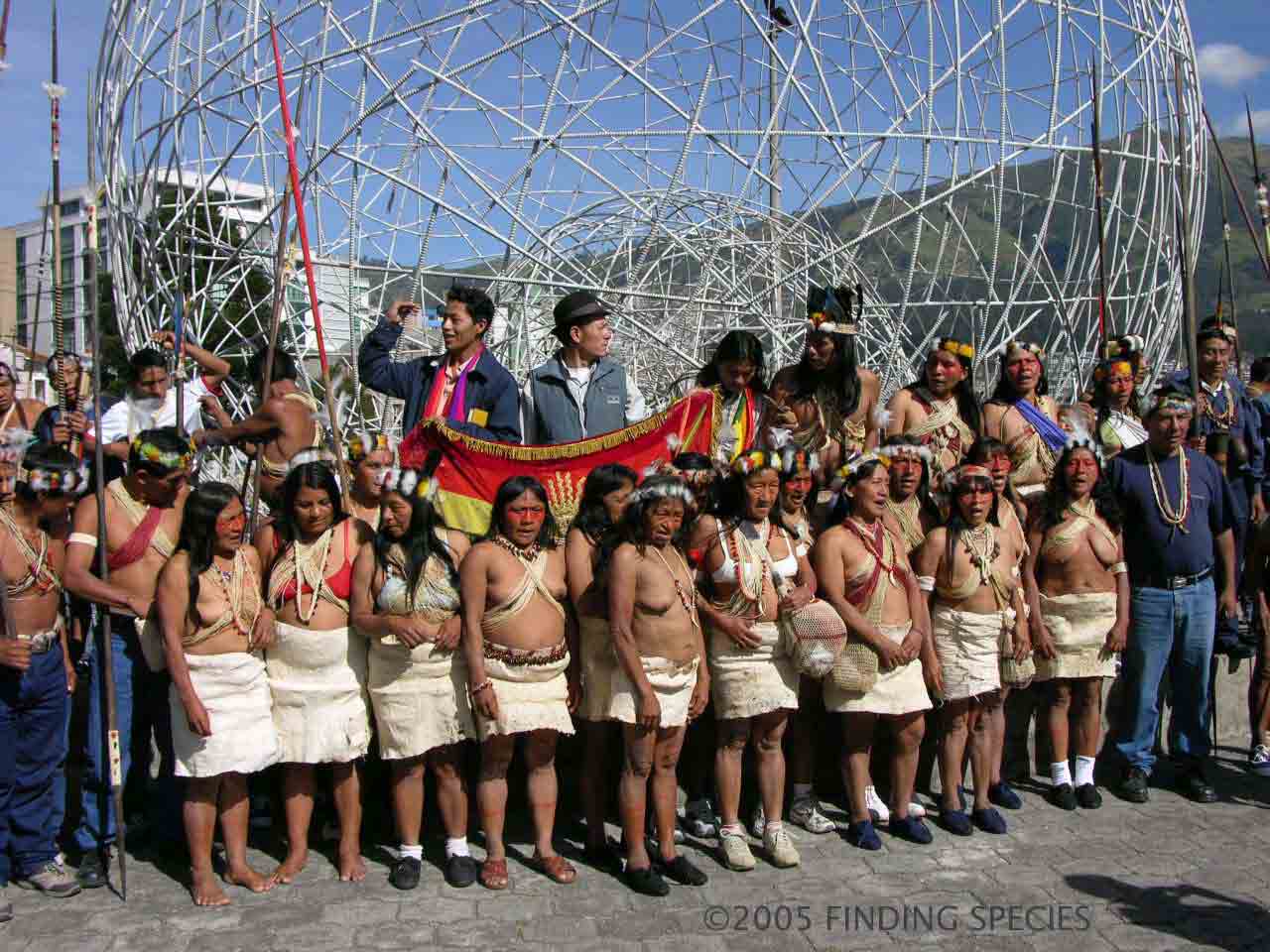
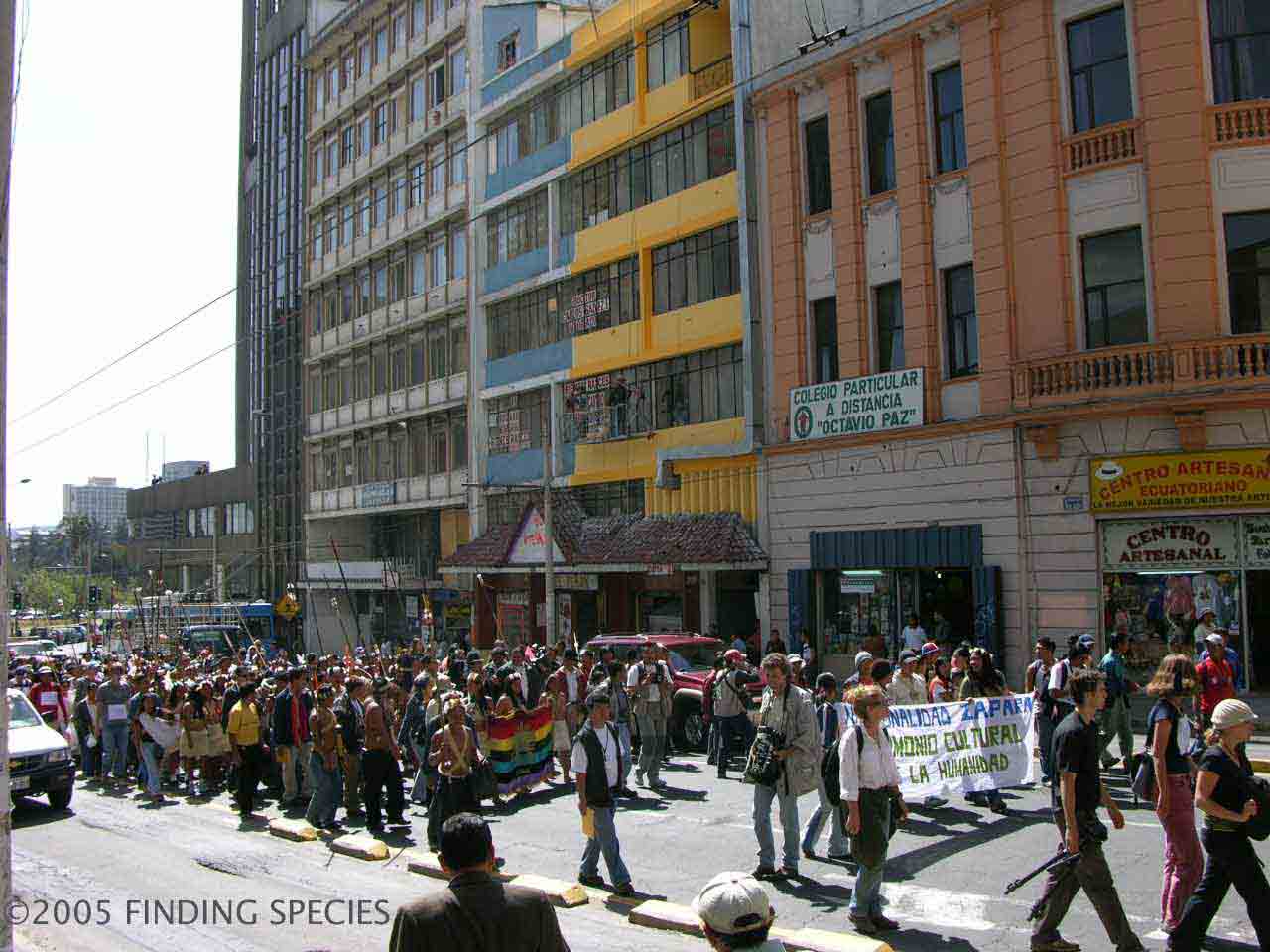
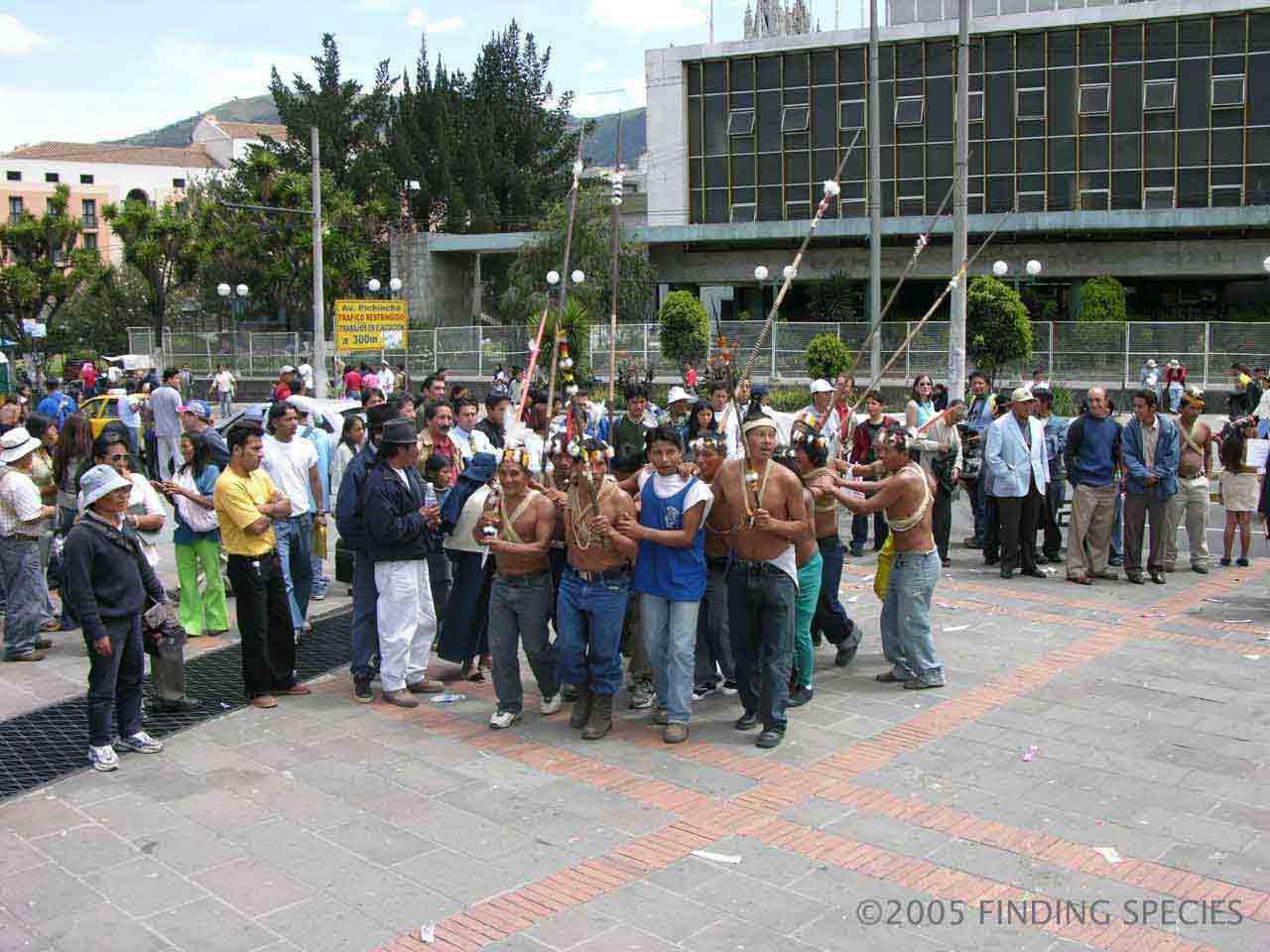
70 Waorani March in the Streets of Quito
El Comercio
Wearing their traditional clothing and shouting
loudly, 70 Waorani marched through the streets
of Quito yesterday in protest of the environmental
license recently conceded to Petrobrás to drill for oil in Block 31. The men carried spears in their hands and some women carried their babies.>>>Read Full Article In English
1 de Noviembre del 2007
70 huaorani marcharon por las calles de Quito
El Comercio
Luciendo sus atuendos típicos y lanzando gritos de protesta. Los hombres con lanzas en sus manos y algunas mujeres cargando a sus bebés. Así marcharon ayer alrededor de 70 huaorani por las calles de Quito en protesta contra la licencia ambiental del bloque 31 entregada a Petrobras.>>> Leer todo el articulo En Espanol
October 31 , 2007
Amazon Indigenous Groups Protest against Petrobrás
El Comercio
Half-naked Amazon indigenous peoples, with spears
and feather crowns on their heads, arrived here
in the capitol to protest the oil extraction
of the Brazilian company Petrobrás, and to ask the government to stop the drilling for crude oil on the land where they live.>>>Read Full Article In English
31 de Octubre del 2007
Indígenas amazónicos protestan contra Petrobras
El Comercio
Indígenas amazónicos semidesnudos, con lanzas y coronas de plumas en sus cabezas, llegaron a esta capital para protestar contra la explotación petrolera de la empresa brasileña Petrobras y solicitaron al gobierno detener la extracción de crudo en las tierras donde viven.>>> Leer todo el articulo En Espanol
October 17 , 2007
Indigenous Amazonians Demand Petrobrás Leave the Jungle
El Comercio
Some 30 indigenous Amazonians, some with feather
crowns and spears, demonstrated Wednesday in
front of the governmental palace in opposition
to the presence of the Brazilian oil company
Petrobrás. They judge the company's future operations in the Amazon a threat to their people and their land.>>>Read Full Article In English
17 de Octubre del 2007
Indígenas amazónicos piden salida de Petrobras de selva ecuatoriana
El Comercio
Unos 30 indígenas amazónicos, algunos con penachos y lanzas, se manifestaron el miércoles frente al palacio de gobierno para rechazar la presencia de la petrolera brasileña Petrobras en el país por considerar que las futuras operaciones de la compañía en la Amazonia son una amenaza para su pueblo y su territorio.
La oficina de Petrobras en Ecuador no se pronunció de inmediato ante un requerimiento de la AP.>>> Leer todo el articulo En Espanol
September 17 , 2007
Prohibition Doesn't Stop Logging in the Untouchable Zone
El Comercio
The trees of the Yasuní National Park continue to bleed. A forest inspection confirmed the presence of loggers within the "untouchable zone" (zona intangible) reserved exclusively for the uncontacted indigenous people living there.>>>Read Full Article In English
17 de Septiembre del 2007
La veda de madera no frena el tráfico del cedro en la zona intangible
El Comercio
Los bosques del Parque Nacional Yasuní siguen desangrándose. Durante una inspección forestal se constató la presencia de los madereros dentro de la zona intangible. Esta área es reservada exclusivamente para los pueblos todavía no contactados que allí habitan.>>> Leer todo el articulo En Espanol
August 23 , 2007
Waorani to Guard Yasuní
El Comercio
The Waorani promised to guard their ancestral
territory, consisting of the "Untouchable Zone" (zona intangible, or ZI) and the Yasuní National Park.>>>Read Full Article In English
23 de Agosto del 2007
Los huaorani también vigilarán al Yasuní
El Comercio
Los huaorani se comprometerán a vigilar más su territorio ancestral, la Zona Intangible y el Parque Yasuní.>>> Leer todo el articulo En Espanol
August 9 , 2007
The Waorani to Guard the Forests of Yasuní Park
El Comercio
The object is for the Waorani to assume greater
responsibility for the conservation of Yasuní National Park. Towards this end, a delegation of that Amazonian community met yesterday in Quito with various representatives of the government.>>>Read Full Article In English
9 de Agosto del 2007
Los huaorani serán los vigilantes de los bosques del Parque Yasuní
El Comercio
El objetivo es que los huaorani asuman una
mayor responsabilidad en la conservación del Yasuní. Dentro de ese proceso, una delegación de dicha comunidad amazónica se reunió ayer en Quito con varios representantes del Gobierno.>>> Leer todo el articulo En Espanol
August 8 , 2007
Waorani Discuss the Untouchable Zone
El Comercio
Yesterday morning, over 150 Waorani from 32
communities in Napo, Pastazo, and Orellana met
in Coca. At the meeting they finalized proposals
regarding the handling of the untouchable zone
(zone intangible, or ZI).>>>Read Full Article In English
8 de Agosto del 2007
Los huaorani hablaron de la zona intangible
El Comercio
Ayer en la mañana, alrededor de 150 huaoranis de 32 comunidades de Napo, Pastaza y Orellana se reunieron.>>> Leer todo el articulo En Espanol
July 7, 2007 -
Images of Yasuní at Al Gore's Concerts
El Comercio
"We don't want oil companies in Yasuní, we don't want them to destroy our lands," said Manuela Ima, here as part of a group of Waorani women. Meanwhile, her friend Dayo Inomenga sung praises of the rainforest.>>>Read Full Article In English
7 de Julio del 2007 -
Las imágenes del Yasuní, en conciertos de Al Gore
El Comercio No queremos las petroleras dentro del Yasuní, no queremos que se destruyan nuestras tierras". Esto decía Manuela Ima, del grupo de mujeres huaorani, mientras su compañera Dayu Inomenga cantaba en su lengua reverencias a la selva.>>>Leer todo el articulo En Espanol
June 27, 2007 -
Justice in the Texaco Case
El Comercio On June 26, the Federal Court of New York confirmed the legal competence of the Ecuadorian judges to rule on this case for the legal damages that more than 30,000 affected residents of the Amazon brought against the oil company Chevron-Texaco. The ruling denied the multinational company’s request for arbitration on the appeals of the plaintiffs, who are affected by deaths of family members, chronic illnesses, and the ecological destruction of their habitat, caused by the use of obsolete technology in the extraction of crude oil in the area. The court’s decision is a verdict for justice in the long judicial process that has already lasted more than 14 years, with testimony before courts in the U.S. and in Lago Agrio, Ecuador. The plaintiffs seek compensation for the conflicts between hydrocarbon exploitation and the lives and well-being of the indigenous Amazonian peoples, such as the destruction of the fragile ecosystems in their care.>>>Read Full Article In English
27 Junio del 2007 -
Justicia en caso Texaco
El Comercio La Corte Federal de Nueva York confirmó, el 19 de este mes, la competencia legal de jueces ecuatorianos para dirimir en el juicio, por daños y perjuicios, que más de 30 000 damnificados de la Amazonía entablaron contra la petrolera Chevron-Texaco, desechando el pedido de esa multinacional de resolver por arbitraje los reclamos de los demandantes afectados por muertes de familiares, enfermedades crónicas y ruina ecológica de su hábitat, causados por el uso de tecnología obsoleta en la extracción del crudo de esa concesión.La decisión de dicha Corte significa un veredicto de justicia en el largo proceso judicial que, por mas de 14 años, se sustancia ante tribunales norteamericanos y de Lago Agrio en procura de una indemnización que repare las realidades conflictivas entre la explotación hidrocarburífera, la vida y la salud de los pueblos indígenas amazónicos, así como la destrucción mercantilista de los ecosistemas frágiles en su conservación.>>>Leer todo el articulo En Espanol
June 7, 2007 -
Campaign for ITT Moratorium Has International Showcase
El Comercio Lourdes Tibán took advantage of the U.N. Permanent Forum on Indigenous Rights to promote Ecuador’s campaign in favor of Yasuní National Park.>>>Read Full Article In English
7 Junio del 2007 -
La campaña por la moratoria del ITT tiene vitrina internacional
El Comercio Lourdes Tibán no desaprovechó para vender la idea de Ecuador en el Foro Permanente de Derechos Indígenas de las Naciones Unidas. Ella consideró que era propicio para promocionar la campaña a favor del Parque Nacional Yasuní.>>>Leer todo el articulo En Espanol
June 3, 2007 -
Ecuadorian Government Launches Plan to Leave Oil Below-ground in Yasuní
El Comercio The Ecuadorian government launched a national and international campaign to obtain funds in exchange for leaving the oil in Yasuní reserve underground. The reserve is in the Amazon rainforest, and has been declared a world biosphere reserve.>>>Read Full Article In English
3 Junio del 2007 -
Gobierno lanzará el martes una campania para conseguir recursos a cambio de dejar en tierra el petróleo de la reserva Yasuní
El Comercio El Gobierno lanzará el martes una campaña a nivel nacional e internacional para conseguir recursos a cambio de dejar en tierra el petróleo de la reserva Yasuní, en la Amazonia local y declarada reserva mundial de la biósfera.>>>Leer todo el articulo En Espanol
May 27, 2007 -
Extraction of Crude Oil Reaches the Untouchable Zone
El Comercio Ecuador’s environmental laws prohibit all extractive activities in natural reserve areas. But the northern part of Yasuní National Park has now been conceeded to oil companies due to arguments of national interest.>>>Read Full Article In English
27 de Mayo del 2007 -
La extracción de crudo se toma hasta la Zona Intangible
El Comercio Las leyes ambientales prohíben toda actividad extractiva en las áreas de reserva natural. Pero argumentando intereses nacionales, la parte norte del Yasuní ha sido concesionada a las empresas petroleras.>>>Leer todo el articulo En Espanol
May 27, 2007 -
Waorani Cling to Oil Assistance in Yasuní, After State Abandonment
El Comercio Dressed in long black pants, with his top half naked, Nambae, one of the Waorani warrier chiefs, planted himself squarely in the middle of the road with an imposing attitude.>>>Read Full Article In English
27 de Mayo del 2007 -
Los huao se aferran a la asistencia petrolera en Yasuní, hay abandono estatal
El Comercio Vestía pantaloneta negra alargada y tenía su dorso desnudo. Nambae, uno de los jefes guerreros huaorani, se plantó en media vía con una actitud imponente.>>>Leer todo el articulo En Espanol
-May 19, 2007 -
Indigenous People Fight for Conservation of Yasuni in the U.N.
El Comercio The Council on Development of the Indigenous Peoples and Nations of Ecuador (Codenpe) joined the campaign for conservation yesterday, urging the international community to help Ecuador financially so that they will not have to extract the existing oil in Yasuní National Park.>>>Read Full Article In English
NUEVO19 de Mayo del 2007 -
Los indígenas abogaron por la conservación del Yasuní en la ONU
El Comercio El Consejo de Desarrollo de los Pueblos y Nacionalidades Indígenas de Ecuador (Codenpe) se sumó a la campaña. Ayer instó a la comunidad internacional a que ayude financieramente para que Ecuador no tenga que explotar el petróleo existente en el Parque Nacional de Yasuní (PNY).>>>Leer todo el articulo En Espanol
May 18, 2007 -
Three Indigenous Groups Hidden In Yasuní National Park in Danger of Disappearing
El Comercio The three uncontacted indigenous groups presumed to be hidden in the jungle of western Ecuador are now in immediate danger of disappearing, with no traces left, thanks to pressures from loggers, oil companies, and diseases foreign to their environment.>>>Read Full Article In English
18 de May del 2007 -
Tres grupos de indígenas ocultos en el Parque Nacional Yasuní están en peligro de desaparecer
El Comercio Los tres grupos de indígenas ocultos que se presume se refugian en la selva del oriente de Ecuador están en peligro inmediato de desaparecer sin dejar rastro por la presión de madereros, petroleros y enfermedades ajenas a su ambiente.>>>Leer todo el articulo En Espanol
May 17, 2007 -
Nine Forest Rangers Guard the 900,000 Hectares of Yasuní National Park
El Comercio Nine forest rangers, with scarce means and budgets, guard the more than 900,000 hectares of Yasuní National Park. They protect the jungle itself as well as the voluntary isolation of several primitive tribes that live in the park, which is the largest and the most important natural reserve in Ecuador.>>>Read Full Article In English
17 de May del 2007 -
Nueve guardabosques vigilan las 900 000 hectáreas de parque Yasuní en Ecuador
El Comercio Nueve guardabosques, con escasos medios y presupuesto, vigilan las más de 900 000 hectáreas del Parque Nacional Yasuní, para proteger la selva y el aislamiento voluntario de algunos pueblos primitivos que habitan la mayor y más importante reserva natural de Ecuador.>>>Leer todo el articulo En Espanol
May 2007 -
Ecuadorian Government Proposes Plan to NOT Drill in ITT
Save America's Forests News Story -
In recent weeks, an intense debate has been unfolding in Ecuador: develop the massive oil fields in the heart of the country’s only Amazonian national park, Yasuní, or leave the oil in the ground in order to protect the park’s extraordinary biodiversity and indigenous peoples living in voluntary isolation. Yasuní National Park is part of the Napo Moist Forest Region, considered by many scientists to be the most biodiverse forest on earth, with record or near record amounts of insects, birds, monkeys, amphibians, trees, and plants.
Over the past several weeks, however, Ecuadorian President Rafael Correa has repeatedly been advertising his government’s offer that if the international community can compensate the country with half of the forecasted lost revenues, they will leave the oil in the ground. Correa estimates this figure at around $350 million per year. >>>Read Full Article In English
Mayo del 2007 -
El gobierno de Ecuadorian propone plan para no perforar adentro el ITT.
Save America's Forests News Story -
En semanas recientes, un discusión intenso ha estado revelando en Ecuador: desarrollar los yacimientos de petróleo masivos en el corazón del único parque nacional Amazonian del país, Yasuní, o dejar el aceite en el de tierra para proteger a la biodiversidad extraordinaria y a la gente indígena del parque que viven en el aislamiento voluntario. El parque nacional de Yasuní es parte de la región húmeda del bosque de Napo, considerada por muchos científicos ser la mayoría del bosque del biodiverse en la tierra, con cantidades de registro de registro o cercanas de insectos, de pájaros, de monos, de anfibios, de árboles, y de plantas. Sobre el pasado varias semanas, sin embargo, presidente Rafael Correa de Ecuadorian ha estado anunciando en varias ocasiones la oferta de su gobierno que si la comunidad internacional puede compensar el país con la mitad de los réditos perdidos pronosticados, ellos dejará el aceite en la tierra. Correa estima esta figura aproximadamente $350 millones por año. >>>Leer todo el articulo En Espanol
April 19, 2007 -
Correa Proposes Policy to Protect Nomadic Peoples of the Amazon
Ecuadorian President Rafael Correa proposed today a state policy to protect two nomadic tribes living in voluntary isolation in the Amazon.>>>Read Full Article In English
19 de Abril del 2007 -
Correa propone política para proteger pueblos nómadas amazonicos
El presidente ecuatoriano, Rafael Correa, propuso hoy una política de Estado para proteger a dos pueblos nómadas que viven en aislamiento voluntario en la Amazonía.>>>Leer todo el articulo En Espanol
January 31, 2007 -
Use of $2 Million Isn’t Justified in the Amazon
El Comercio-
Ecuadorian President Rafael Correa proposed today a state policy to protect two nomadic tribes living in voluntary isolation in the Amazon. >>>Read Full Article In English
31 de enero del 2007
El uso de 2 millones de dólares no se justifica en la Amazonia
Un informe preparado por el Ministerio de Bienestar Social (MBS) en Pastaza, revela varias irregularidades cometidas en la Confederación de Nacionalidades Indígenas de la Amazonia Ecuatoriana (Confeniae) y en otras organizaciones. La suma bordea un millón de dólares en proyectos y una cifra similar en construcciones. >>>Leer todo el articulo En Espanol
January 9, 2007 -
Ecuadorian Government Creates 2 Million Acre "Intangible Zone"
Save America's Forests News Story -
-
Ecuadorian President Alfredo Palacio signed the long-awaited Presidential Decree delimiting the Intangible Zone, or Zona Intangible as its called in Ecuador. Oil extraction, as well as logging, is permanently prohibited within the zone.The Intangible Zone is designed to protect the Tagaeri-Taromenane—the last two known indigenous groups in voluntary isolation
in Ecuador.>>>Read Full Article In English
9 de enero del 2007
El gobierno ecuatoriano crea 758,000 hectarea Zona
Intangible
Presidente ecuatoriano Alfredo Palacio firmó el Decreto para delimitar la Zona Intangible. Todo tipo de actividad extractivista, como petroleo y la tala de madera, esta prohibido dentro la zona. La Zona Intangible es diseñado a proteger los Tagaeri-Taromenane, los ultimos pueblos en aislamiento voluntario en Ecuador >>>Leer todo el articulo En Espanol
▲▲▲▲▲▲▲▲▲▲▲
▼▼▼▼▼▼▼▼▼▼▼ |
2007
2006 |
▲▲▲▲▲▲▲▲▲▲▲
▼▼▼▼▼▼▼▼▼▼▼ |
October 2006
Scientists and NGOs Criticize New “Roadless” Petrobras Plan to Build Oil Facilities in Yasuní
Octubre 2006
Los científicos y NGOs Critican Nuevo Plan de Petrobras para construir instalaciones en Yasuní
Save America's Forests News - In two separate letters delivered to the Ecuadorian government, a group of over 40 Yasuni scientists (known as the Scientists Concerned for Yasuni) and 6 international NGOs have criticized Petrobras’ new Environmental Impact Study (EIS) of their new “roadless” plan to build oil production facilities in Yasuní.
Although both letters praise Ecuador for stopping Petrobras from building an access road into Yasuni National Park, they emphasize that the new project design (construction and operation of 2 drilling platforms, flow lines, a processing facility and pipeline) will cause major impacts to the region’s biodiversity and indigenous peoples.
For example, a massive new processing facility would be constructed on the alluvial plain of the world renowned Tiputini River. Sixteen hectares of mature, inundated forests along the Tiputini would have to be cleared and drained, completely destroying the habitat.
Also, the rainforest surrounding the proposed sites for the two drilling platforms is home to large mammal species considered indicators of high quality rainforest, such as tapir, giant armadillo, giant anteater, and large monkey species.
Moreover, the processing facility would be built on an important hunting area for the Kichwa community of Chiru Isla, and the drilling platforms would be located within the prime hunting grounds of the Waorani community of Kawimeno.
Both letters also emphasize that the Waorani representative organizations-ONHAE and AMWAE-were never consulted about the project, let alone grant consent for activities on their ancestral territory.
Therefore, both letters urge the Ecuadorian government to NOT approve the study and to cancel the project.
If Ecuador proceeds with the project, the scientist letter details a number of critical changes that would significantly reduce the project’s impacts. The scientists propose the utilization of a nearby existing processing facility instead of the construction of a new plant along the Tiputini. They also propose eliminating one of the two drilling platforms through the use of Extended Reach Drilling. The scientists also demand that the project only proceed with the prior, informed consent of ONHAE.
The Scientist Concerned for Yasuni letter was signed by 44 scientists, including many with extensive research experience within the park.
The NGO letter was signed by Save America’s Forests, Land is Life, Amazon Watch, Environmental Defense, Friends of the Earth, and Rainforest Rescue.
Read the 2 letters, the Petrobras EIS, and more, below
Los científicos y NGOs Critican Nuevo Plan de Petrobras
EN ESPAÑOL Save America's Forests News - En dos cartas entregadas al gobierno ecuatoriano, un grupo de mas de 40 científicos de Yasuni (conocido como los Científicos Preocupados para Yasuni) y 6 NGOs internacionales ha criticado Petrobras' nuevo Estudio de Impacto Ambiental.
Aunque ambas cartas elogian Ecuador para parar la construcción de un vía de acceso en Parque Nacional Yasuní por Petrobras, ellos enfatizan que el nuevo diseño de proyecto (la construcción y la operación de 2 plataformas de producción, las líneas del flujo, un estación central de procesamiento y un oleoducto) causará impactos mayores a la biodiversidad y personas indígenas de la región.
Por ejemplo, una nueva estación central de procesamiento se construiría en la llanura aluvial del famoso Río Tiputini. Dieciséis hectáreas de bosques maduros e inundados por el Tiputini se tendrían que vaciadas y desaguadas, destruyendo completamente el hábitat.
También, la selva tropical que rodea los sitios propuestos para las dos plataformas de producción está el hogar de especies grandes del mamíferos considerados como indicadores de selva de alta calidad, tal como tapir, armadillo gigantesco, oso hormiguero gigantesco, y unas especies grande de mono.
Además, la nueva estación central de procesamiento se construiría en un importante lugar de cacería para la comunidad Kichwa de Chiru Isla, y las plataformas de producción se localizarían dentro una importante área de cacería para la comunidad Waorani de Kawimeno.
Ambas cartas enfatizan también que las organizaciones representativos del Waorani—
ONHAE y AMWAE—nunca se consultaron acerca del proyecto, ni dieron consentimiento para las actividades en su territorio ancestral.
Por lo tanto, ambas cartas instan el gobierno ecuatoriano a NO aprobar el estudio y para cancelar el proyecto.
Si Ecuador avanza con el proyecto, la carta de los científicos detalla varios cambios críticos que reducirían apreciablemente los impactos de proyecto. Los científicos proponen la utilización de un estación de procesamiento que ya existe cerca en vez de la construcción de una nueva estación por el Tiputini. Ellos proponen también eliminando uno de las dos plataformas de producción por el uso del “Extended Reach Drilling.” Los científicos demandan también que el proyecto sólo avanza con el consentimiento previo y informado de ONHAE.
La carta de los Científicos Preocupados para Yasuni fue firmado por 44 científicos, inclusive muchos con la experiencia extensa de investigación dentro del parque. La carta de los NGOs fue firmada por Save America’s Forests, Land is Life, Amazon Watch, Environmental Defense, Friends of the Earth, and Rainforest Rescue.
Read the Letters Opposing the New Petrobras "roadless" EIS
Lea las letras que oponen el Petrobras nuevo EIS "roadless" en espanol
NGO letter
Letra del NGO en español
Scientists Concerned for Yasuní letter
Letra del Los Científicos Preocupados por Yasuní en español
Read the New Petrobras "roadless" EIS Executive Summary in Spanish
Lea las Petrobras nuevo EIS "roadless" resumen ejuecutivo en español
Read the entire New Petrobras "roadless" EIS in Spanish
Lea las entero Petrobras nuevo EIS en español
Map of Yasuni and the Petrobras EIS
Mapa de Yasuní y del Petrobras EIS
Government Information page on the Petrobras EIS
Página de la información del gobierno en el Petrobras EIS
October 2006
Chinese Oil Company Escalates
Exploration Activities
within Yasuní
Octubre 2006
La Compañía china Intensifica
las Actividades dentro de Yasuní
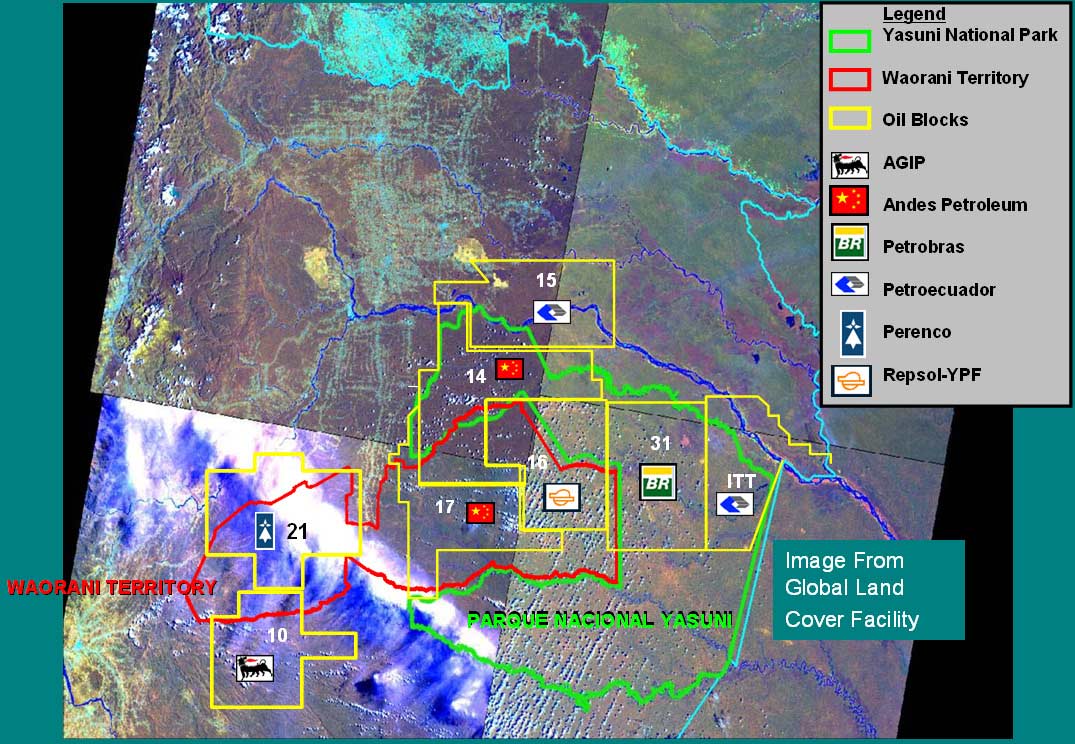
Save America's Forests News - Andes Petroleum, a partnership between two Chinese state oil companies (CNPC and Sinopec) is currently conducting a massive 3D seismic operation in Yasuní National Park.
The seismic operation is taking place in the southeast section of Block 14, between the two scientific research stations on the Tiputini River. The Tiputini is one of the most intact parts of Yasuni and world renowned as one of the greatest spots on Earth to spot birds and wildlife.
Further, Andes Petroleum is preparing to drill two new exploratory wells within this section of the Park as well. The Ecuadorian Environment Ministry is currently considering the environmental licenses for the two wells, but it is expected that they will approve them soon.
There is deep concern about the ecological impacts of a large seismic project and drilling of two wells in this intact and megadiverse region. For example, similar seismic projects in Ecuador and Bolivia have driven out local wildlife populations. The greatest fear, of course, is that large oil reserves may be discovered and the area will soon be devastated by major oil extraction activities.
Octubre 2006
La Compañía china Intensifica las Actividades dentro de Yasuní
EN ESPAÑOL Save America's Forests News - Andes Petroleum, una asociación entre dos compañías del petróleo del estado china (CNPC y Sinopec) realiza actualmente un masivo operación sísmica 3D en Parque Nacional Yasuní.
La operación sísmica sucede en la sección del sudeste del Bloque 14, entre las dos estaciones científica en el Río Tiputini. El Tiputini es uno de las partes más intactas de Yasuni y el renombrados como uno de los mejor lugares en la Tierra para observar pájaros y fauna.
Aún más, Andes Petroleum prepara para taladrar dos nuevos pozos exploratorios dentro esta sección del Parque también. El Ministerio del Ambiente de Ecuador es actualmente estudiando las licencias ambientales para los dos pozos, pero se espera que los aprobará pronto.
Hay mucha preocupación acerca de los impactos ecológicos de un proyecto sísmico y taladrando de dos pozos en esta región tan intacto y megadiverse. Por ejemplo, proyectos sísmicos semejantes realizados en Ecuador y Bolivia han expulsado a poblaciones locales de fauna. El temor más grande, por supuesto, es que reservas grandes del petróleo se pueden descubrir y el área pronto será devastada por actividades mayores de extracción de petróleo.
October 2006
Ecuador Prepares to Create “Intangible Zone”
Massive Area Off-limits to logging and oil
Octubre 2006
Ecuador Prepara para Crear la "Zona Intangible"
Un Area masiva Prohibida a petróleo y la tala
Save America's Forests News - The Ecuadorian government is preparing to finally delimit a 1,873,093 acre Zona Intangible—or Intangible Zone—in the heart of the Ecuadorian Amazon via a Presidential Decree. Extractive activities such as logging and oil would be prohibited within the zone. The Intangible Zone is designed to protect the Tagaeri and Taromenane, the last two known groups of indigenous peoples living in voluntary isolation in Ecuador. The Zone is comprised of the southern part of Yasuni National Park and the southeast section of Huaorani Territory.
The Intangible Zone was initially created in 1999, but its borders were never defined. Therefore, the Zone didn’t technically exist and there was little enforcement. One important consequence is that illegal logging within the Zone has escalated in recent years, leading to deadly confrontations between loggers and the Tagaeri-Taromenane.
There is controversial language in the Decree that places restrictions on—but doesn’t prohibit—oil activities within the buffer zone of the Intangible Zone. Therefore, it has been strongly criticized by CONAIE (the representative organization for the indigenous groups of Ecuador). CONAIE argues that all 4,942,200 acres of ancestral Huaorani Territory should be off-limits to oil activities.
However, the Intangible Zone does put the most potentially destructive oil reserve—
Awant, located in Andes Petroleum’s Block 17—off-limits. Awant is located in the general region where it is believed the Taromenane are currently living. Andes Petroleum has indicated its interest in developing this oil reserve. The Intangible Zone also includes the Obe oil reserve—located in Petrobras’ Block 31—and part of the ITT reserves. The Decree also prohibits the construction of oil access roads within the buffer zone.
The latest draft of the Decree also includes—for the first time—a government commitment to set up both permanent and rotating logging control posts. It is widely believed that such posts are a critical first step in stopping the illegal logging since all the wood exits via only a few rivers and down one principal road.
Save America’s Forests has been very active in the process of finalizing the Intangible Zone over the past several months. Save America’s Forests —working very closely with ONHAE Vice President Moi Enomenga—was the driving force that led to the consultation of the Huaorani about the Intangible Zone. Over 150 Huaorani from nearly all the communities gathered in Coca on September 8 to meet with Environment Ministry officials and learn the details of the Intangible Zone and voice concerns about how it may impact them. Save America’s Forests was also instrumental in forcing some key changes added to the latest draft of the Decree, including the logging posts mentioned above, and greater representation of ONHAE in the management of the Zone.
EN ESPAÑOL Save America's Forests News - El gobierno ecuatoriano prepara para finalmente delimitar una Zona Intangible de 758,000 hectáreas en la corazón de la Amazonia ecuatoriana por un Decreto Ejecutivo. Las actividades extractivas tales como petróleo y la tala sería prohibido dentro la zona. La Zona Intangible se diseña para proteger el Tagaeri y Taromenane, los últimos dos grupos conocidos de indígenas en aislamiento voluntario en Ecuador. La Zona se comprende de la parte sur del Parque Nacional Yasuni y la sección sudeste del Territorio Huaorani.
La Zona Intangible se creó inicialmente en 1999, pero sus fronteras nunca se definieron. Por lo tanto, la Zona no existió técnicamente y había poca aplicación. Una consecuencia importante es la tala ilegal dentro de la Zona se ha agravado en los últimos años, llevando a confrontaciones mortales entre madereros y los Tagaeri-Taromenane.
Hay una parte polémico en el Decreto que coloca unas restricciones en—pero no prohibe—las actividades del petróleo dentro de la zona de amortiguamiento de la Zona Intangible. Por lo tanto, ha sido criticado fuertemente por CONAIE. CONAIE discute que todos los 2,000,000 hectáreas de Territorio Huaorani ancestral deben ser prohibidos las actividades petróleo.
Sin embargo, la Zona Intangible incluye la reserva petróleo potencialmente mas destructiva— Awant, localizado en el Bloque 17 de Andes Petroleum—dentro los límites. Awant se localiza en la región general donde lo se cree que los Taromenane vive actualmente. Andes Petroleum ha indicado su interés a desarrollar esta reserva del petróleo. La Zona Intangible incluye también la reserva del petróleo Obe—localizó en Bloque 31 dePetrobras'—y parte de las reservas de ITT. El Decreto prohibe también la construcción de vías de acceso dentro la zona de amortiguamiento.
El último borrdor del Decreto incluye también—para la primera vez—un compromiso del gobierno para establecer controles permanentes y moviles. Se cree extensamente que tales controles son un primer paso crítico a parar la tala ilegal debido a las rutas de salida para los madereros son bien conocidos.
Save America’s Forests ha sido muy activo en el proceso de completar la Zona Intangible sobre los pasados varios meses. Save America’s Forests—trabajando muy de cerca con el Vicepresidente de ONHAE, Moi Enomenga—estaba trabajando muy duro para convencer el gobierno a llevar a cabo la consulta del Huaorani acerca de la Zona Intangible. Mas de 150 Huaorani de casi todas las comunidades reunieron en la Coca el 8 de septiembre con funcionarios de Ministerio de Ambiente para aprender los detalles de la Zona Intangibles y hablar acerca de sus preocupaciones. Save America’s Forests era también instrumental en forzar algunos cambios claves en el último borrador del Decreto, inclusive los controles mencionado arriba, y la representación más justo de ONHAE en la administración de la Zona.
September 2006
PETROBRAS UNVEILS NEW "ROADLESS" DESIGN FOR OIL DRILLING IN YASUNÍ
Save America's Forests News - On August 30, in an invitation-only presentation in Quito, Petrobras unveiled the new project design for extracting oil within one of the most intact parts of Yasuni National Park and Biosphere Reserve. This region is the ancestral territory of the Huaorani and is widely recognized as possessing one of the most biodiverse rainforests on Earth.
The previous project design called for construction of an access road and processing facility within the park to exploit oil from the Nenke and Apaika platforms within Block 31, but was blocked in July 2005 by the Ecuadorian Environment Ministry. The Ministry, acting on intense national and international pressure, called on Petrobras to design a new roadless project.
The new design includes two major changes. First, it moves the processing facility to 2 km north of the park boundary, at the end of the 12 km access road that Petrobras built to the north of the park in early 2005. Second, instead of construction of an access road, helicopters will be used to access the site and facilitate the construction and maintenance of the flow lines and two platforms. Helicopters will be used to transport all equipment, including pipeline pipe, and personnel to one of five heliports within the park (three along the flow line route, and two more at the two platforms).
A total of 23.7 km of flow lines will be built to transport crude and associated waste water and gas from the two drilling platforms to the processing facility, 21.4 km of which will be within the park. The width of the clearing for the flow lines will be 10 meters during construction and reduced to 6 meters during operation. During construction, “small-sized” machinery will use a track of 2.4 km to construct the flow lines. The flow lines will be buried, including the crossing of the Tiputini River.
From the processing facility, a 32.5 km buried pipeline will be built, through primary rainforest north of the park, in order to transport crude to another pipeline originally constructed by Occidental Petroleum and now operated by PetroEcuador. The pipeline route will also be roadless, with helicopters used to deliver pipes to the various heliports along the route. From the second pipeline, the crude will be sent to the OCP pipeline in Lago Agrio, and then to the coast.
Total deforestation from the project will be 29 hectares (H) of primary rainforest. Much of the clearing, 16 H, will be for the processing facility. The clearing for the Nenke platform, located 18 km south of the Tiputini River, will be 3.6 H, including the 1.1 H already cleared for the exploratory well. The clearing for the Apaika platform, located 3.4 km further south from Nenke, will 4.4 H, including the 2 H already cleared for the exploratory well. Nenke will have up to 10 wells, and Apaika up to 20.
Following the presentation, Petrobras was critized by various participants for a lack of public access to information about the new project. Information was only made available in three consultation offices located deep in the rainforest, well beyond the means of most Ecuadorians and NGOs to reasonably access. The three offices were located in three indigenous communities impacted by the project (El Eden (Kichwa), Chiru Isla (Kichwa), and Kawimeno (Waorani)).
In a meeting with Petrobras the week prior to the Quito presentation, Save America´s Forests also criticized Petrobras for not consulting the Waorani leadership, ONHAE ( Organización de Nacionalidad Huaorani de la Amazonia Ecuatoriana ) and AMWAE ( Asociación de Mujeres Waorani de la Amazonia Ecuatoriana). However, Ecuador´s guidelines for consultation mandates that only impacted communities be consulted.
Petrobras plans to deliver the new studies to the Ecuadorian Environment and Energy Ministries for review in the coming weeks. The Environment Ministry has stated that it will post the studies online prior to approval.
Septiembre 2006
PETROBRAS desvela la nueva "No carretera" diseño
para la extracción de petróleo en YASUNÍÍ
EN ESPAÑOL Save America's Forests News - El 30 de agosto, en una invitación, sólo la presentación en Quito, Petrobras dio a conocer el nuevo diseño de los proyectos de extracción de petróleo dentro de una de las más partes intactas del Parque Nacional Yasuní y la Reserva de la Biosfera. Esta región es el territorio ancestral de los Huaorani y es ampliamente reconocido como la posesión de uno de los más biodiversos bosques tropicales de la Tierra.
El diseño del proyecto anterior llamado para la construcción de un camino de acceso y las instalaciones de procesamiento dentro del parque para explotar el petróleo de la Nenke y Apaika plataformas dentro del bloque 31, pero fue bloqueado en julio de 2005 por el Ministerio de Medio Ambiente de Ecuador. El Ministerio, en una intensa presión nacional e internacional, pidió a Petrobras para diseñar un nuevo proyecto roadless.
El nuevo diseño incluye dos cambios importantes. En primer lugar, se mueve la planta de procesamiento a 2 km al norte de la frontera del parque, a finales de los 12 kilometros de carreteras de acceso que Petrobras construido al norte del parque a principios de 2005. En segundo lugar, en lugar de la construcción de un camino de acceso, los helicópteros se utilizarán para tener acceso al sitio Web y facilitar la construcción y el mantenimiento de las líneas de corriente y dos plataformas. Los helicópteros se utilizarán para el transporte de todo el equipo, incluyendo tuberías de oleoductos, y de personal a uno de los cinco helipuertos en el parque (tres a lo largo de la ruta de la línea de flujo, y dos más en las dos plataformas).
Un total de 23,7 kilómetros de líneas de flujo será construido para el transporte de crudo y de las aguas residuales y gas de las dos plataformas de perforación a la planta de procesamiento, 21,4 km de los cuales será en el parque. El ancho de la limpieza de las líneas de flujo será de 10 metros durante la construcción y reducido a 6 metros durante la operación. Durante la construcción, el "pequeño tamaño" mecanismo utilizará una pista de 2,4 km hasta la construcción de líneas de flujo. Las líneas de flujo será enterrado, incluido el cruce del río Tiputini.
Desde la planta de procesamiento, un 32,5 kilometros de tuberías enterradas será construido, a través de bosque primario al norte del parque, con el fin de transportar crudo a otro oleoducto construido originalmente por Occidental Petroleum y ahora operado por PETROECUADOR. La ruta también será roadless, con helicópteros utilizados para tuberías a los distintos helipuertos a lo largo de la ruta. Desde el segundo oleoducto, el crudo se enviará a la oleoducto OCP en Lago Agrio, y luego a la costa.
Total de la deforestación del proyecto será 29 hectáreas (H) de bosque primario. Gran parte de la limpieza, 16 H, será para la planta de procesamiento. El desmonte para la Nenke plataforma, situada 18 km al sur del río Tiputini, será 3,6 H, incluidos los 1,1 H ya despejado para la exploración. El desmonte para la Apaika plataforma, situado 3,4 km más al sur de Nenke, 4,4 H, incluido el 2 H ya despejado para la exploración. Nenke tendrá un máximo de 10 pozos, y Apaika hasta el 20.
Tras la presentación, Petrobras se critized por varios participantes por la falta de acceso público a la información sobre el nuevo proyecto. La información se puso a disposición sólo de consulta en tres oficinas situadas en las profundidades de la selva, más allá de los medios de la mayoría de los ecuatorianos y de las organizaciones no gubernamentales para el acceso razonablemente. Las tres oficinas se sitúan en tres de las comunidades indígenas afectadas por el proyecto (El Eden (Kichwa), Chiru Isla (Kichwa), y Kawimeno (Waorani)).
En una reunión con Petrobras la semana anterior a la presentación Quito, Save America's Forests Petrobras también criticó por no consultar a los Waorani liderazgo, la ONHAE (Organización de Nacionalidad Huaorani de la Amazonía Ecuatoriana) y AMWAE (la Asociación de Mujeres Waorani de la Amazonía Ecuatoriana ). Sin embargo, las directrices del Ecuador para la consulta mandatos que sólo se consultó a las comunidades impactadas.
Petrobras tiene previsto entregar los nuevos estudios a los ecuatorianos Ministerios de Medio Ambiente y Energía para su revisión en las próximas semanas. El Ministerio de Medio Ambiente ha declarado que será puesto en línea los estudios antes de su aprobación.